Dental Sterilization and Instrument Tracking SOP
Create a traceable dental instrument flow from chairside collection to cleaning, packaging, sterilization, storage and release.
ChamberBD Editorial Team
· 8 min read
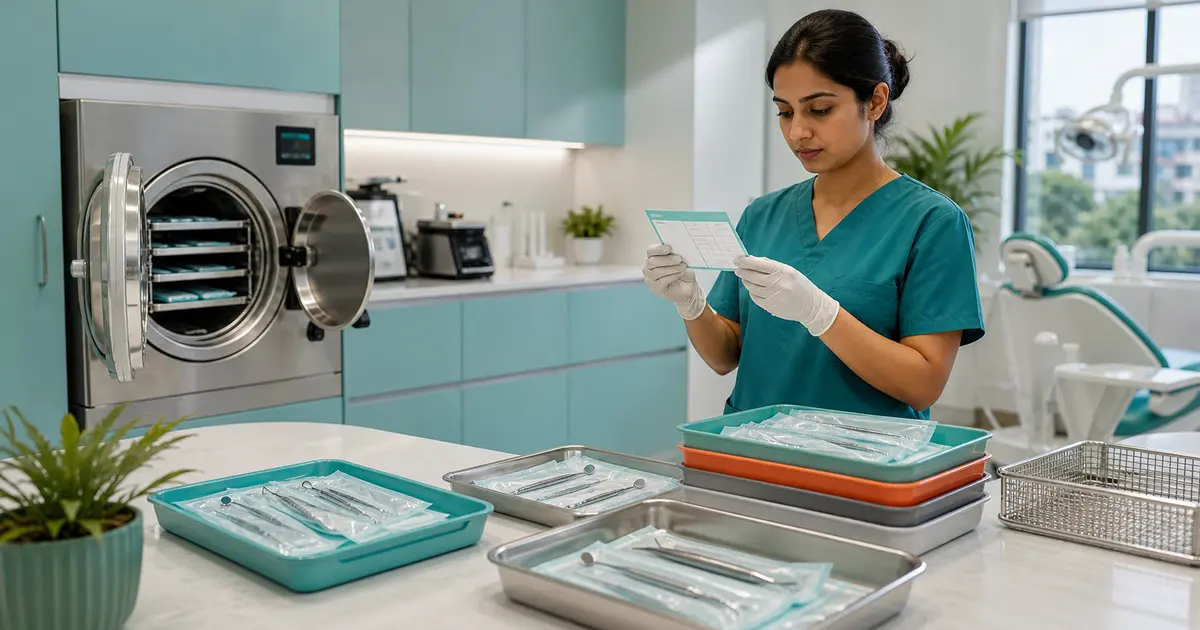
A clean-looking pouch is not proof that an instrument completed the approved reprocessing cycle. The clinic needs an unbroken trail from used tray to cleaning, inspection, packaging, cycle record, storage and chairside release.
Quick answer: Separate dirty and clean flow, identify every load, document cycle checks and release authority, quarantine failures, and connect the pouch or tray to the date and load without exposing patient information.
Why this workflow matters
-
Mixed dirty and clean movement creates preventable contamination risk and makes staff behavior difficult to audit.
-
A load identifier helps the clinic investigate a failed cycle without discarding every instrument or guessing which chair used it.
-
Signed release and maintenance records show whether equipment, operator and indicators were checked before reuse.
Step-by-step workflow
1. Collect and contain safely
Move used instruments in a closed, puncture-resistant container through a defined dirty route. Record the source chair or tray without placing patient details on exposed containers.
2. Clean, inspect and prepare
Follow the device and instrument manufacturer instructions. Inspect joints, surfaces and packaging; remove damaged items before they enter a sterilization load.
3. Label the load and cycle
Assign a unique load reference and record date, operator, equipment, cycle, contents and required indicator results. Avoid handwritten codes that two staff interpret differently.
4. Release or quarantine
Only an authorized, trained person should release a completed load. If a control fails, quarantine the load, mark affected stock unavailable and follow the written corrective process.
5. Store and link to use
Keep packages dry, intact and protected. At chairside, record enough load or pouch detail to support traceability, then investigate torn, wet or unclear packages before use.
Required fields and controls
| Control | Working rule |
|---|---|
| Dirty-to-clean zoning | Use one-way movement, separate surfaces and visible status. |
| Load record | Capture operator, equipment, cycle and control outcome. |
| Release authority | Require trained sign-off before instruments return to stock. |
| Failure quarantine | Prevent booking or issue of instruments in a failed load. |
Numbers worth reviewing
| Measure | Definition |
|---|---|
| Complete load records | loads with all required fields ÷ total loads |
| Quarantine closure time | time from failed check to documented resolution |
| Package defects | wet, torn, open or unreadable pouches found before use |
| Maintenance compliance | completed preventive maintenance ÷ scheduled maintenance |
Common mistakes and safeguards
-
Using color alone as proof of a successful complete process.
-
Letting clean and used trays cross on the same counter or trolley.
-
Editing a failed record instead of preserving it and documenting corrective action.
A practical 30-day rollout
-
Map the current instrument reprocessing process, record a baseline and name one accountable owner.
-
Pilot the new controls with one instrument reprocessing team; do not migrate every old record at once.
-
Review exceptions, staff feedback and mismatched records; then simplify fields that nobody can verify.
-
Approve a short SOP, train every role, record sign-off and schedule the first monthly audit.
Where software helps
A clinic system can store load references, staff responsibility, maintenance due dates, quarantine status and audit attachments. It cannot decide the correct clinical reprocessing method; the clinic must follow current regulator, manufacturer and infection-control requirements.
Related guides and next steps
Use the following dental clinic resources to connect this workflow with the rest of your operating system.
This article provides operational education, not individualized clinical, legal or accounting advice. An authorized person should adapt the policy to the organization’s services, risks and applicable requirements.
Implementation checkpoint
Pilot instrument reprocessing before a full rollout.
Accountable owner
Name a trained sterilization lead and a clinical approver.
Evidence to keep
Retain cycle logs, required control results, release sign-off and maintenance records.
Minimum review note
Audit incomplete loads, quarantine events and package defects monthly.
Frequently asked questions
What should a dental sterilization log contain?
Use the fields required by current local policy and manufacturer instructions; commonly this includes date, equipment, cycle or load ID, operator, contents, checks, outcome and release or quarantine action.
Can software prove an instrument is sterile?
No. Software records evidence and traceability. Validated equipment, approved procedures, required controls and trained release decisions provide the operational assurance.
What happens when a cycle check fails?
Keep the record, quarantine the affected load, prevent use, notify the responsible person and follow the clinic's approved investigation and reprocessing procedure.
Run your dental clinic on autopilot
ChamberBD Dental handles tooth charts, treatment plans, chair scheduling, lab work tracking and billing with installments & dues — from ৳500/month, in বাংলা and English.